

Time, score and situation. A player who can answer those three questions at every whistle is thinking the game. These are not talent questions, and a kid can learn them at eight, nine or ten years old.
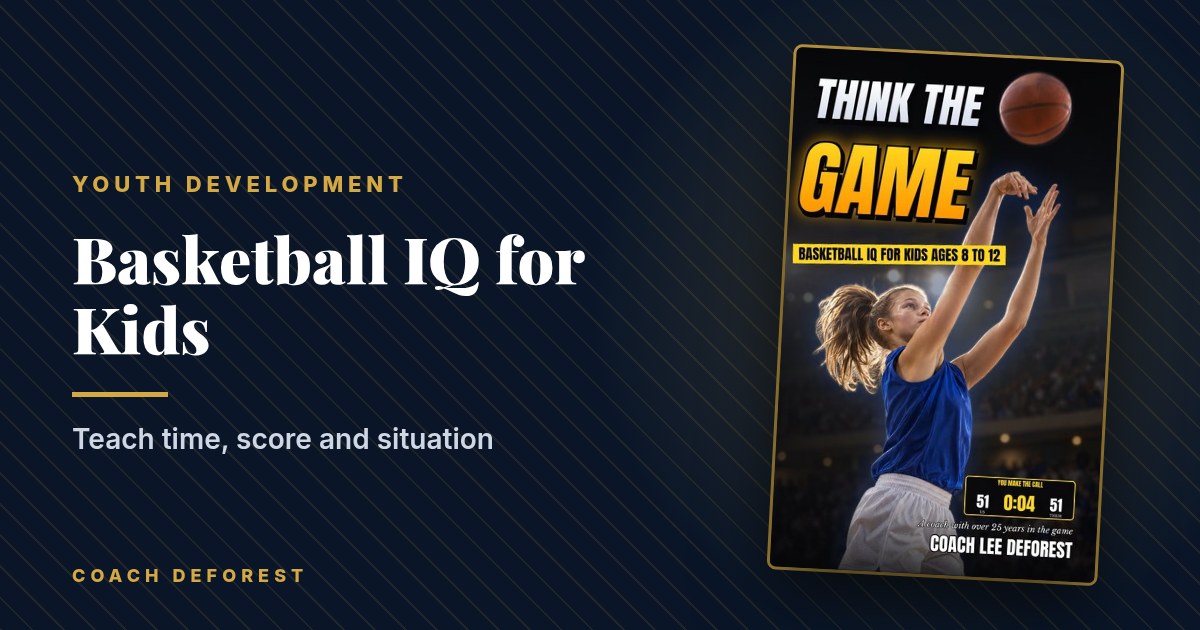
That idea is behind my new book for young players, Think the Game: Basketball IQ for Kids Ages 8 to 12. This post shares the heart of it, so you can try it with your own player or team this week.
The End of the Game Is a Skill
A close game comes down to three or four possessions. One pass in from out of bounds. One free throw. One foul. The team that handles those moments wins.
Shooting is a skill. Defense is a skill. You learn them by doing them again and again, and the end of the game is no different. In the book, the habit is simple: practice the end of the game every day, and do it last, when the players are tired, because that is when it comes in a game.
Three Questions for Every Player
Every player on the floor and on the bench must know three things at every moment of a close game.
Time. How much time is on the game clock? How many timeouts does your team have, and how many do they have?
Score. Are you up or down, and by how much? One basket behind and two baskets behind are two different games.
Situation. Everything else. Who is in foul trouble? Is either team in the bonus? Which way does the possession arrow point?
The way to teach it is to say it out loud. In practice, in the middle of a drill, ask “Time?” “Score?” “Who do we foul?” If a player cannot answer, the drill stops until that player can. Kids can do the same on their own. Every time the whistle blows, look at the scoreboard and have your answers before the ball is back in play.
Try It: Read One Scoreboard
Here is a scoreboard late in a game, from the book.
| You | Them | Time | Team fouls | Arrow | Timeouts left |
|---|---|---|---|---|---|
| 41 | 42 | 0:38 | Both teams in the bonus | Them | You 1, them 2 |
Now ask the three questions.
Time. Thirty-eight seconds. You have one timeout. They have two.
Score. You are down by one. One basket puts you ahead.
Situation. Both teams are in the bonus, so any foul means free throws. The arrow points to them, so a held ball goes to them.
That is the whole skill. Read every scoreboard that way, at every whistle. Rules change from league to league, so the book reminds players to check their league and ask their coach before the season how many team fouls make the bonus, whether the league shoots the one and one, and how many timeouts each team gets.
Four Places to Be
Late in a close game there are only four places to be: ahead with the ball, ahead on defense, behind with the ball and behind on defense. Each one has its own rules. Here is the first one from the book, written for the player:
Your team does not need a fast shot. It needs time off the clock.
Expect to be fouled, keep the ball in two hands, keep moving, and pass quickly. Do not hold the ball and wait for the foul. Only your best free throw shooter holds it. On defense with the lead, the rules flip: do nothing that stops the clock, never let the ball be rolled in, no threes and no second shots.
The Seven Ball Toughness Rules
Turnovers decide close games too, so the book gives players seven short rules for the ball under pressure. Learn the words, and say them the same way every time:
Eyes on the rim. Do not dribble on the catch. Keep the ball out of the middle. Stop on two feet. Pivot low. Wait until the ball sees you. A whistle beats a steal.
The book also teaches a count players can hold in their head: hold for four, dribble for four, pick up and pivot for four. You have more time with the ball than you think.
What Is in the Book
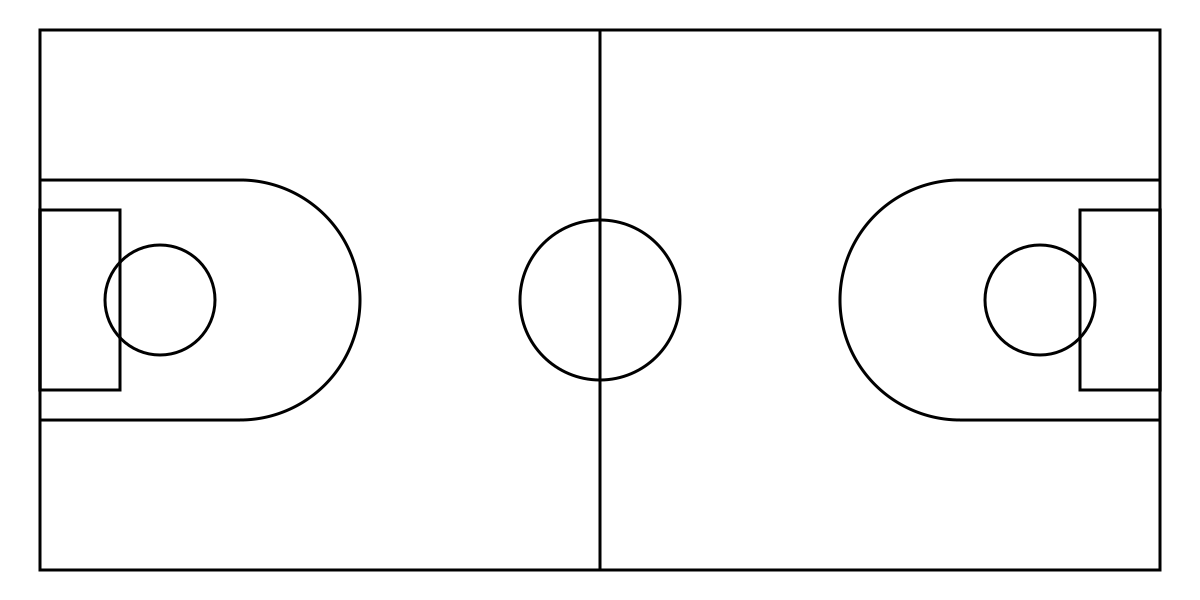
Think the Game: Basketball IQ for Kids Ages 8 to 12 has 32 You Make the Call pages. Each one shows a scoreboard and a real court diagram. The player reads the scoreboard, makes the call, then turns the page for the coach’s answer and the rule behind it. It also includes 12 plays every player should know, 15 ball toughness challenges with a score sheet, a situation tournament for a team, a gym class or a driveway, and a certificate when you finish. Read it alone, or with a parent, a coach or a teammate.
- See the full contents on the Think the Game book page.
- Get it on Amazon: Kindle, paperback or hardcover.
- Coaches can pair it with Practice Drills for Ball Toughness and the Basketball IQ Test in Practice.