

To beat a 1-3-1 zone, attack its baseline. One defender has to cover both corners and the rim, so put two guards in the slots, keep a player in each corner, and get the ball to the corner or short corner before the trap forms. When three defenders shade to the ball, reverse it fast and look for the weak-side duck-in or lob.
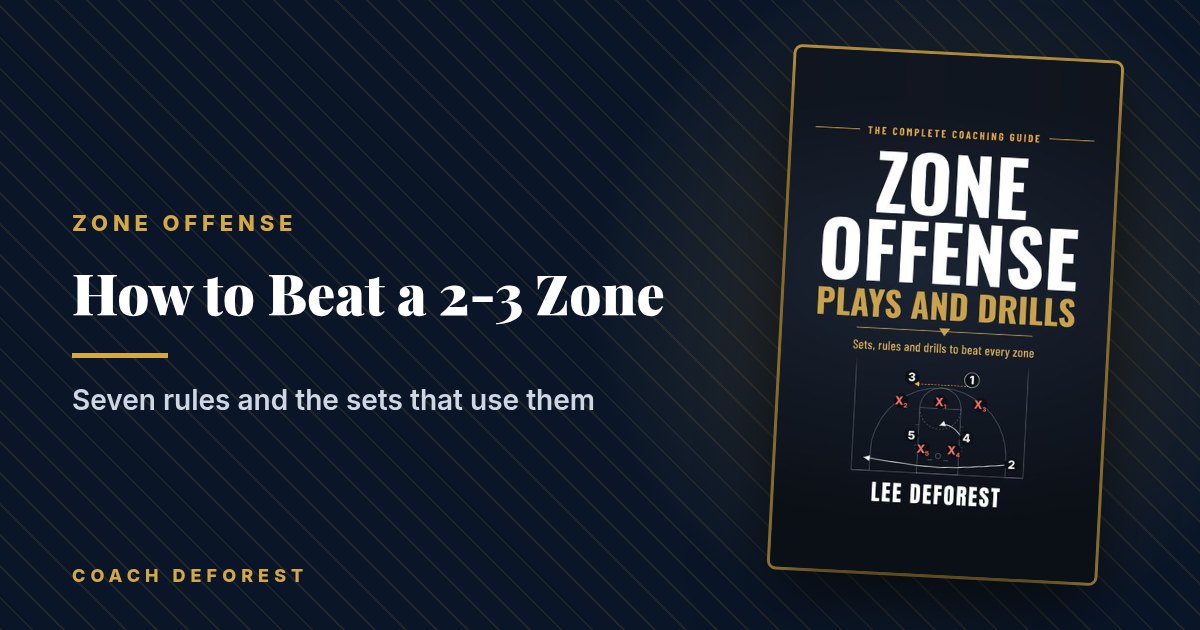
The 1-3-1 bothers a lot of teams because it looks long and active. Here is how my book Zone Offense Plays and Drills takes it apart.
Where the 1-3-1 Breaks
The book puts the whole problem in two sentences:
The 1-3-1 is built to trap the wings and the corners. Its weakness is the baseline: one defender has to cover both corners and the rim.
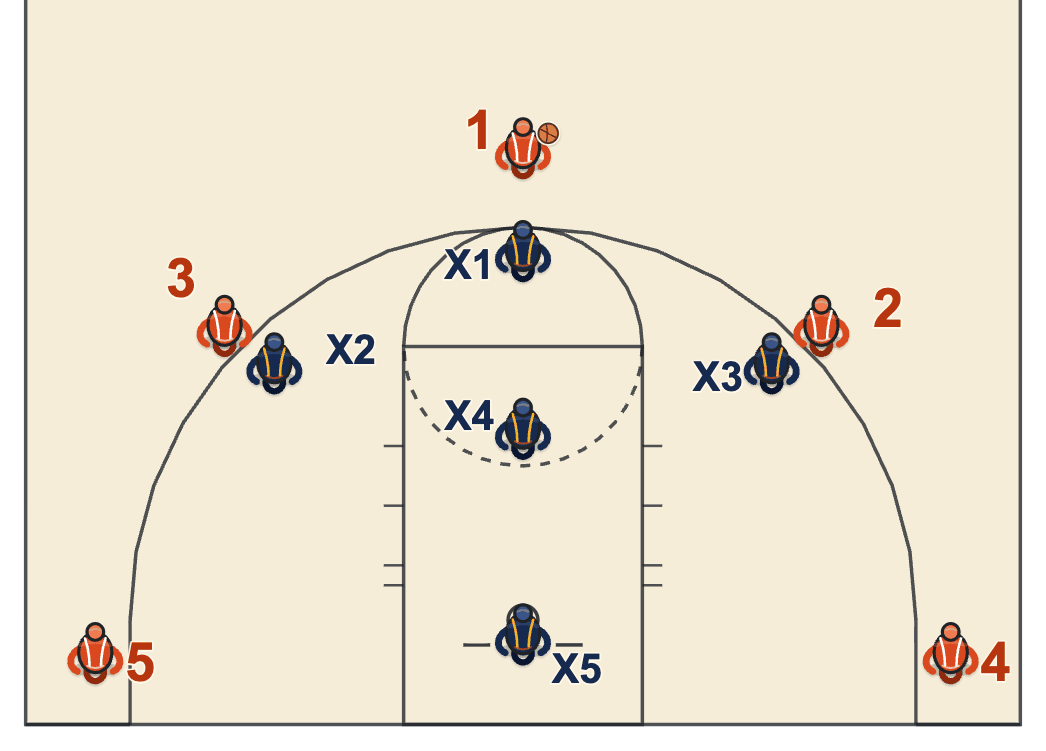 1-3-1: one up, three across, one on the baseline.
Everything else follows from that picture. There is one defender up top, one in the high post area and only one true inside defender. That makes the high post and elbows live once the middle defender steps to the ball, and it makes offensive rebounding a rule, not a suggestion.
Five Rules Against the 1-3-1
Use an even front. The book’s even and odd rule says an odd front from the defense is beaten by an even front from the offense. Two guards split the top defender, and he cannot guard both slots. A 1-4 high works too.
Skip to the corner before the trap closes. The baseline defender cannot get to the far corner in time. The skip has to go before the trap closes, not after.
Corner to elbow. When the corner is trapped, the pass back to the elbow is open.
Screen the middle and baseline defenders. Pin the one inside defender and the baseline runner is alone.
Crash the glass. One inside defender also means weak block-outs.
Melt the Zone
The book calls the first adjustment melting the zone, and it starts with where your guards stand:
Get to the slots. The closer your guards get to the slots around the three-point line, the harder it is for the 1-3-1.
The top defender takes the first pass, the bottom defender is splitting the corner pass, and there is a defender in the high post. Sitting in the slots makes those three choose.
Then watch how many defenders go to the ball.
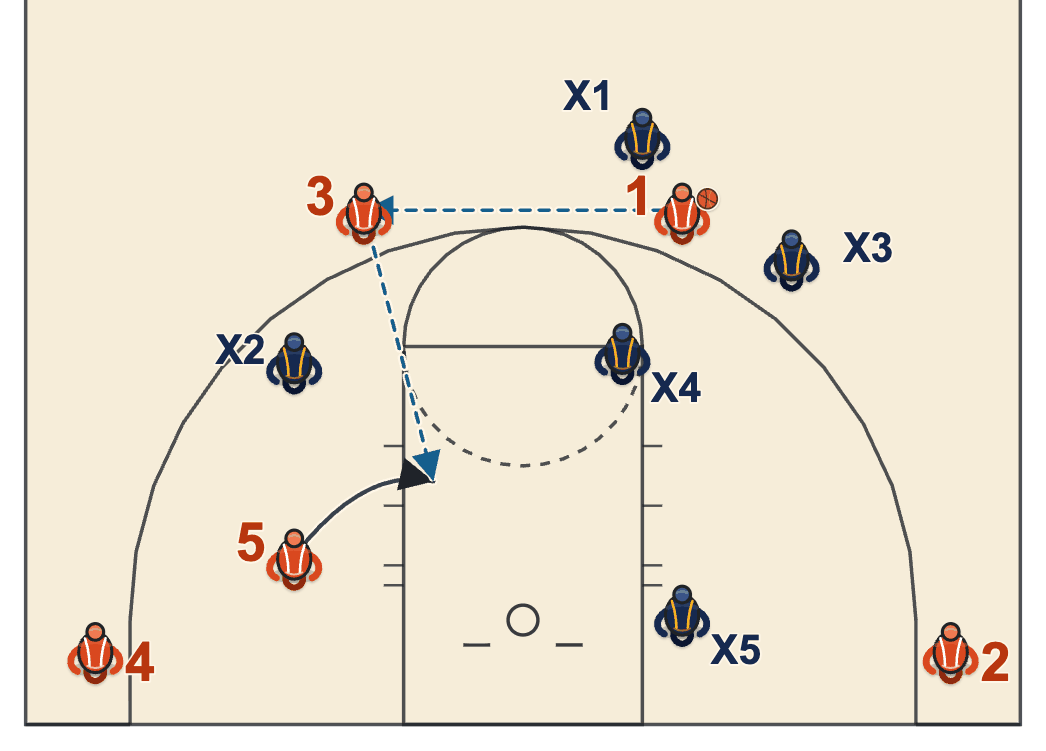 Three on the ball. X1, X3 and X4 all shade to 1 in the left slot. 1 reverses quickly to 3, and 5 ducks in from the weak side for the catch. 2 and 4 hold the corners.
Three on the ball means reverse. The weak-side lob or the duck-in is open because the baseline defender cannot be on both sides. Keep a player in each corner so the wings and the baseline defender have to cover ground.
The last melt rule is about the passes themselves:
Short, quick passes. Do not throw long, looping passes over the defense.
The faster the ball goes guard to guard and guard to forward, the harder it is for the 1-3-1 to adjust. A long lob over a zone with long arms is how a 1-3-1 gets its steals.
Four Sets That Use Those Rules
“4” (Dr. James Gels). A pass to the corner and a screen on the middle defender make a 2-on-1 against the baseline defender.
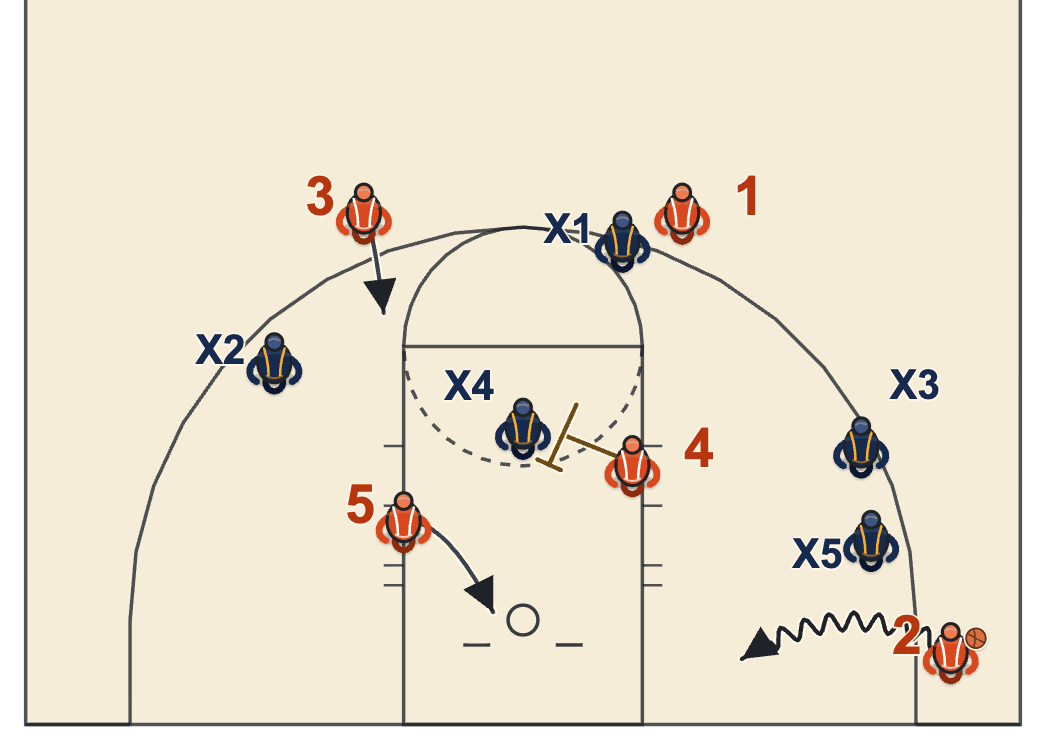 2. 4 pins the middle defender (X4). 2 dribbles along the baseline, 5 slides toward the rim and 3 steps up.
The timing is everything. The screen goes on as the corner man catches, so his baseline drive starts on the catch. If he holds the ball in the corner, the wing and baseline defenders trap him. The book says it plainly: the 2-on-1 only exists before the trap arrives.
“24” (Dr. James Gels). Two screens at once, on the baseline defender and on the middle defender, for a post cutting under the rim. The guard dribbles to the slot for the angle and hits the cutter for the inside shot. “34” is the same play run from the other side.
14 Drop (Kevin Boyle). From a 1-4 high. The guard dribbles toward the wing, the ball-side high post dives and the shooter drops to the corner. The baseline defender has to deal with the dive, so the corner is empty for a three.
Under (Kevin Boyle). This is the call when the 1-3-1 starts trapping the first side. Two quick passes reach the corner, a post flashes to the high post so the middle defender hesitates to drop, and the far-corner player cuts along the baseline behind the defense.
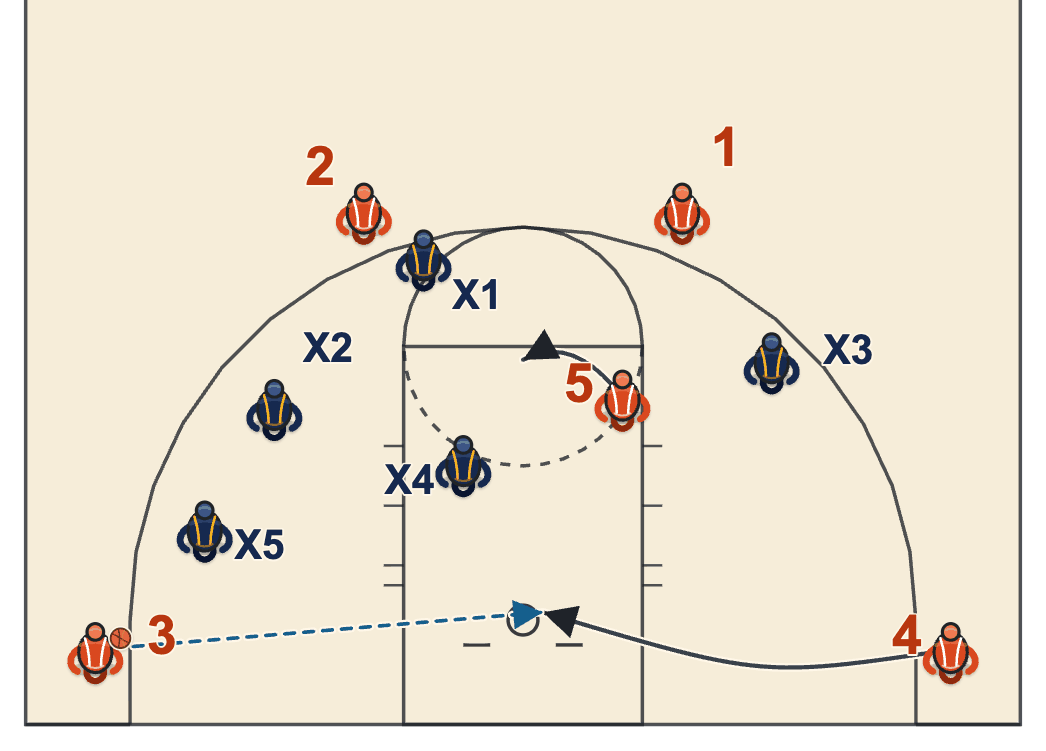 2. X5 runs to the corner. 5 flashes to the high post so X4 hesitates to drop. 4 cuts from the far corner along the baseline and 3 hits him under the basket.
The baseline cut starts on the corner catch, not before, or the baseline defender sees him and stays home.
When the 1-3-1 Traps: Hubie Brown’s Answer
Some 1-3-1 teams live on the wing trap. The book’s answer comes from Hubie Brown. Do not fight the trap. Accept it and reverse the ball to the other guard, who attacks the next defender off the dribble right away. The best shooter goes to the ball-side corner and both posts roll down to the blocks.
A second version passes out of the trap to a post in the middle, who turns and faces at once and attacks, so the defense has to choose between two shooters.
What to Put on the Card
The book’s game-night card gives the 1-3-1 one line: melt to the slots, call “4” or Under if they trap. That is enough. If the zone changes during a live trip, finish with the rules (gaps, middle, short corner, skip) and change your front on the next dead ball.
For the 2-3, read How to Beat a 2-3 Zone. If you play the 1-3-1 yourself, see the 1-3-1 zone defense page.
Frequently Asked Questions
What is the weakness of a 1-3-1 zone? The baseline. One defender has to cover both corners and the rim, so the corners, short corners and weak-side block are open if the ball gets there before the trap.
What alignment beats a 1-3-1? An even front. Two guards in the slots split the lone top defender. A 1-4 high also works.
How do you handle the 1-3-1 trap? Do not hold the ball and do not throw long, looping passes. Reverse quickly to the other guard, who attacks off the dribble, or hit a post in the middle who turns and faces.
Should you skip the ball against a 1-3-1? Yes, to the far corner, but only before the trap closes. A late skip is how the zone gets its steals.
Get every set, drill and the two-week install in Zone Offense Plays and Drills, available in paperback on Amazon.