

To beat a 2-3 zone, attack the three places it is weak: the high post between the two top defenders, the short corners, and the far corner after the zone shifts. Line up in the gaps, get the ball to the high post, and make the middle defender choose between two threats. Then move the ball faster than five defenders can slide.
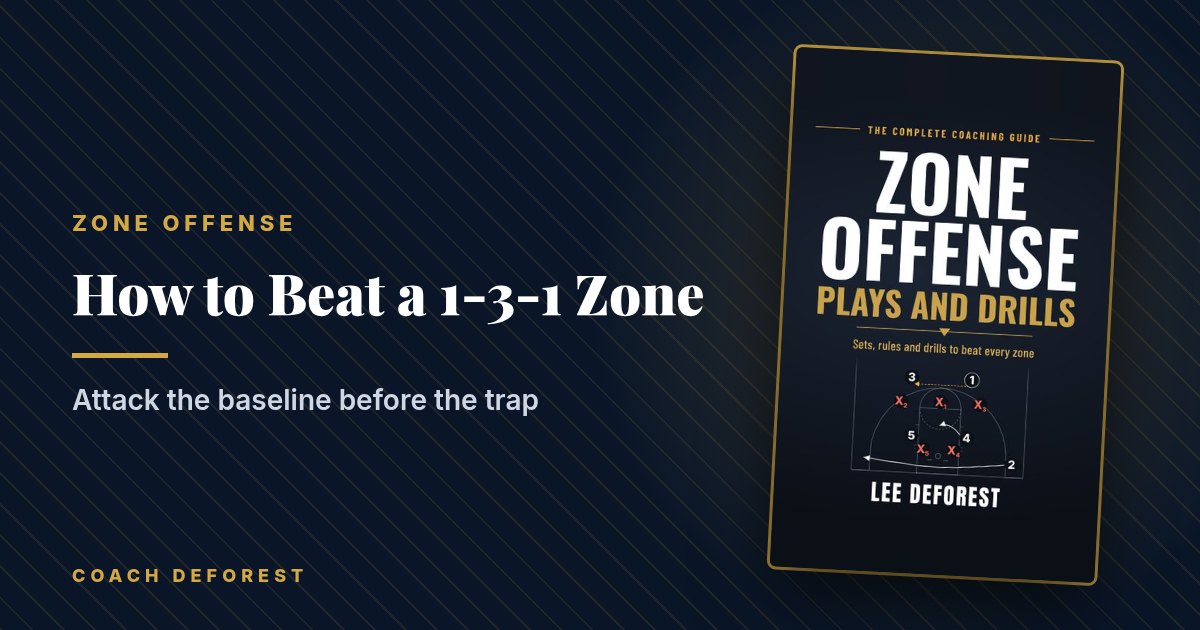
That is the short answer. Here is the longer one, taken from my book Zone Offense Plays and Drills.
Know What You Are Looking At
The first job is naming the zone. The book puts it simply:
Two looks on the first trip down settle most of it: how many defenders are out front, and who meets the first pass to the wing.
Two defenders up top and three across the back is a 2-3. If the middle defender steps up into a 2-1-2, attack it the same way.
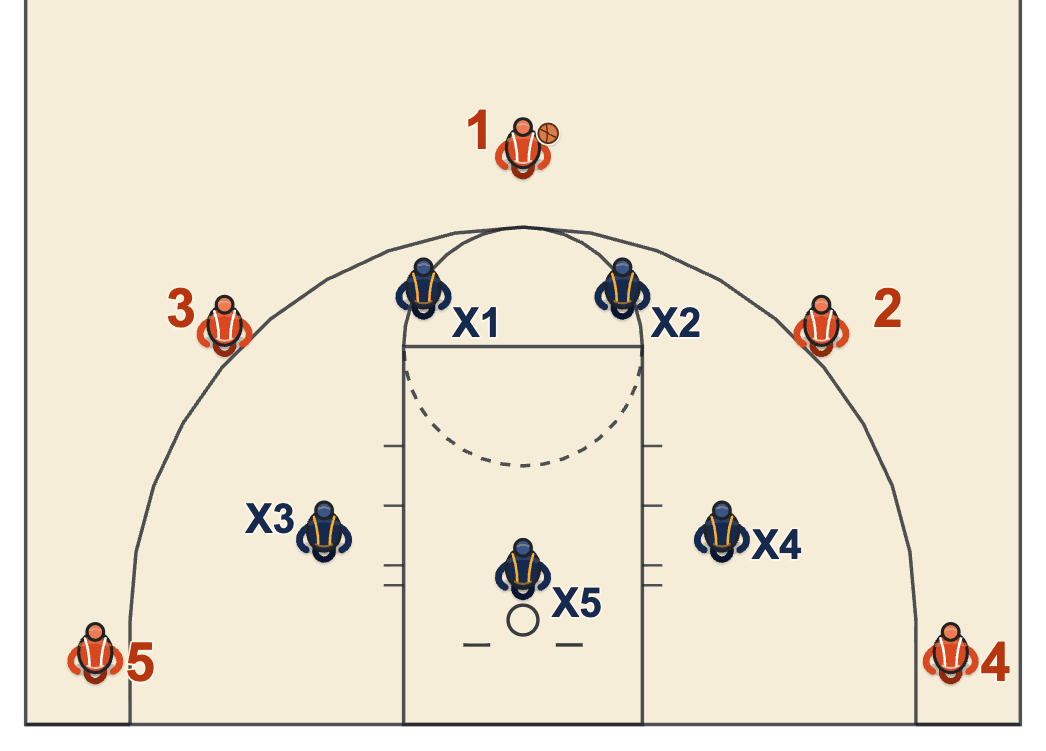 2-3: two up, three back.
Then remember where it breaks. The 2-3 is strong at the rim. It gives up the high post, the short corners and the far corner once it has shifted. One rule follows from that right away. Do not post a big on the low block, because all three bottom defenders can reach him. Run your low post from short corner to short corner instead.
The Seven Rules
A zone guards areas, not people. The book says you beat it three ways: put two attackers in one defender’s area, make one defender guard two threats, and move the ball faster than the zone can shift. Every set in the book is one of these seven rules with a name on it.
1. Sit in the gaps. Line up between defenders, never in front of one. Against two up top, put one guard right between them. A player in a gap makes two defenders decide who takes him, and one dribble at either of them forces the choice.
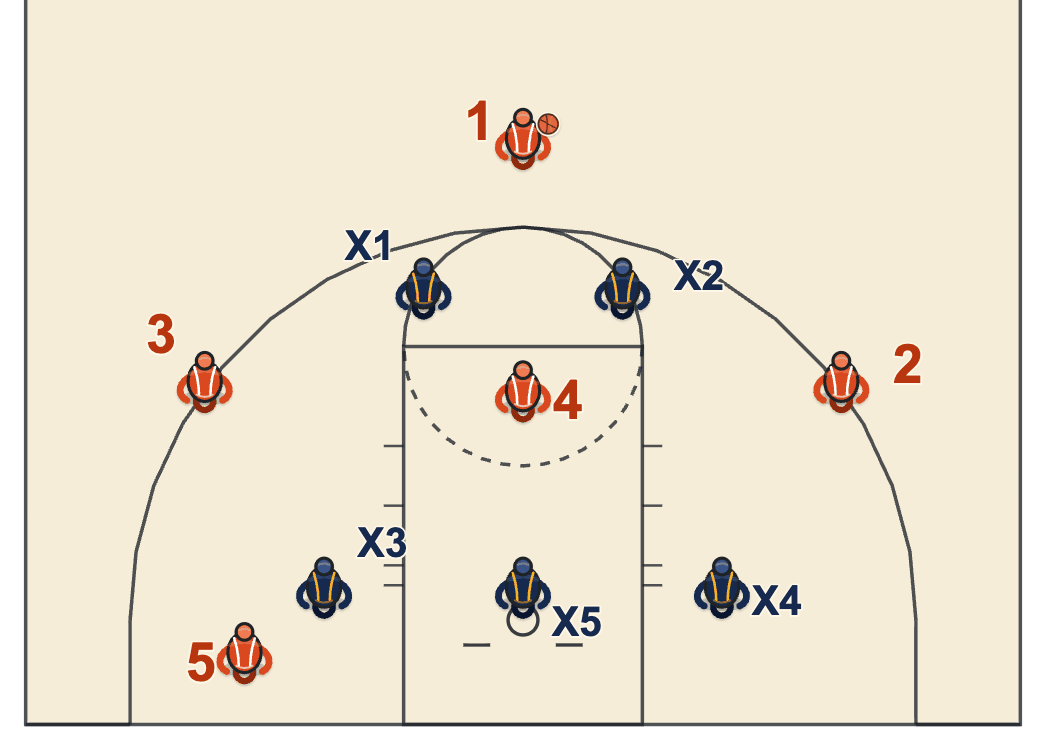 Gaps against a 2-3. The point (1) splits the two top defenders, the wings (2 and 3) sit between a top and a bottom defender, the high post (4) sits in the middle and the baseline post (5) starts in the right short corner.
2. Put a body in the high post. Flash a player to the free-throw line area as the ball moves, even if he never gets it. The middle defender has to step up, and that pulls the zone off the baseline. A catch there turns him into a passer facing the rim.
3. Use the short corner. Put a post player on the baseline halfway between the block and the corner. It is the one spot a 2-3 cannot cover without giving something up. If the middle defender steps out to him, the high post dives behind. If the bottom defender drops to him, the wing above is open.
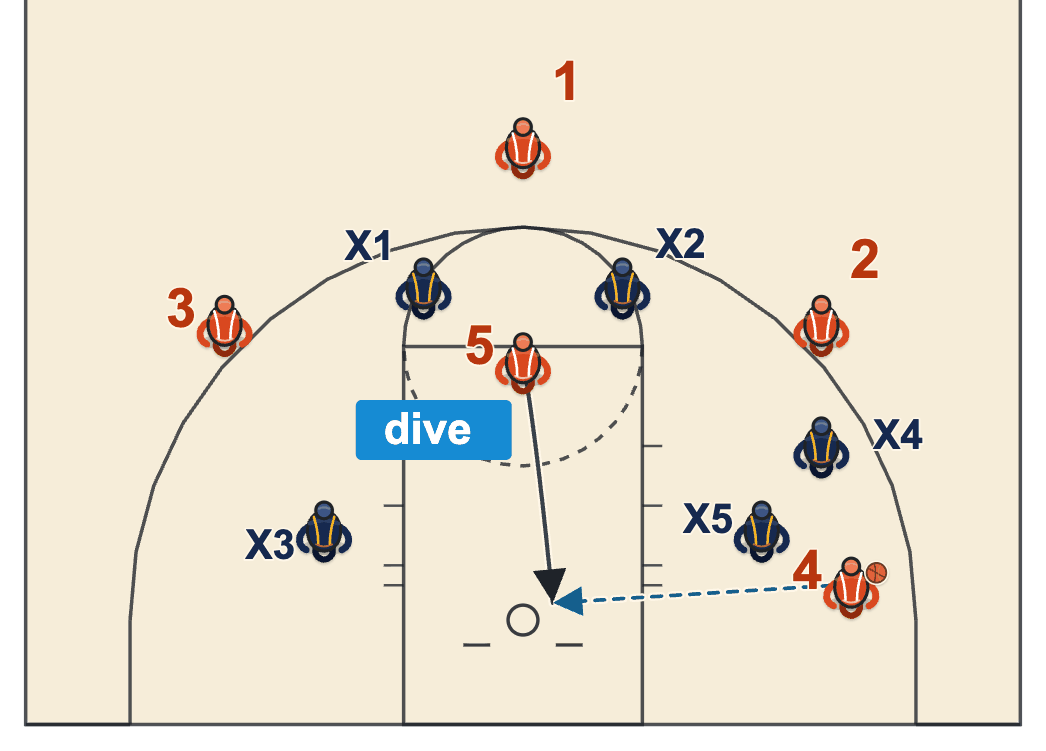 Short corner and high-low. The ball reaches the short corner (4), the middle defender has to come out to him, and the high post (5) dives to the rim behind him.
4. Overload, then skip. Put three attackers on one side, let the zone slide, then throw it over the top. A pass travels faster than five defenders can shift. For a young team that cannot make the long skip yet, swing it with two shorter passes.
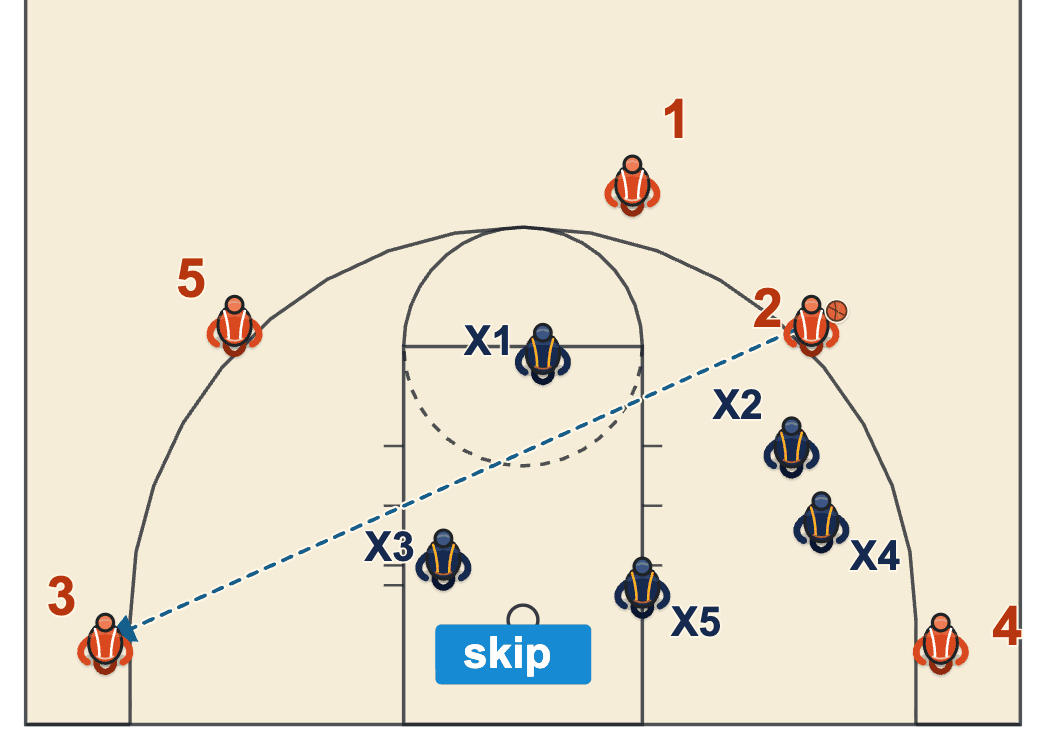 Overload and skip. Three players (1, 2 and 4) load the left side. The wing (2) skips over the shifted zone to the far corner (3).
5. Screen the zone, then seal. Zone defenders are taught to move to areas, not to fight screens. Treat them as screen targets. Screen the bottom or middle defender, then seal the man you screened.
6. Move while the ball is in the air. Cut on the flight of the pass, not after the catch. A zone resets every time the ball stops.
7. Touch the paint before the three. Get the ball to the high post, the short corner or the lane on a drive before you shoot from outside. A paint touch makes the zone collapse, and the three after it comes with the defender running at you.
The book quotes Ettore Messina on rule one:
“Offensive players never occupy positions where one defender can defend two offensive players at the same time.”
The Base Alignment and the First Read
Against a 2-3, line up in a 1-3-1. The point splits the top two, the wings sit between a top and a bottom defender, one post is in the high post and one runs the baseline from short corner to short corner. The book gives the first read in four sentences:
The first read is always the same. Get the ball to the elbow or high post. If the middle defender steps up, the high post looks to the baseline post or the short corner. If he stays home, the high post shoots or turns and looks to the far corner.
Expect one answer from the defense. Some teams double the short corner with the middle and ball-side bottom defenders. Pass back out right away and cut behind the double before it resets.
Three Sets Built on Those Rules
Kansas Play 1 (Bill Self). Swing the ball to the corner, then hit the elbow and go high-low. The guard who makes the first pass sprints through to the corner and has to beat the swing there. The post cuts to the elbow on the pass to the corner, the other post seals his man on the block, and the elbow feeds him. Walk it until the corner man is already there when the wing turns to pass.
Wing Lob. The wing entry pulls the outside bottom defender up. The ball goes back through the point to the far wing, a post screens the middle defender, and the first wing cuts to the rim for the lob. The read is honest. If that bottom defender stays home on the baseline, nobody cuts and the ball keeps moving.
Butler. A ball screen on the top of the zone, a shallow cut and a baseline runner. The teaching point underneath it is the most useful idea in the chapter: outnumber the corner.
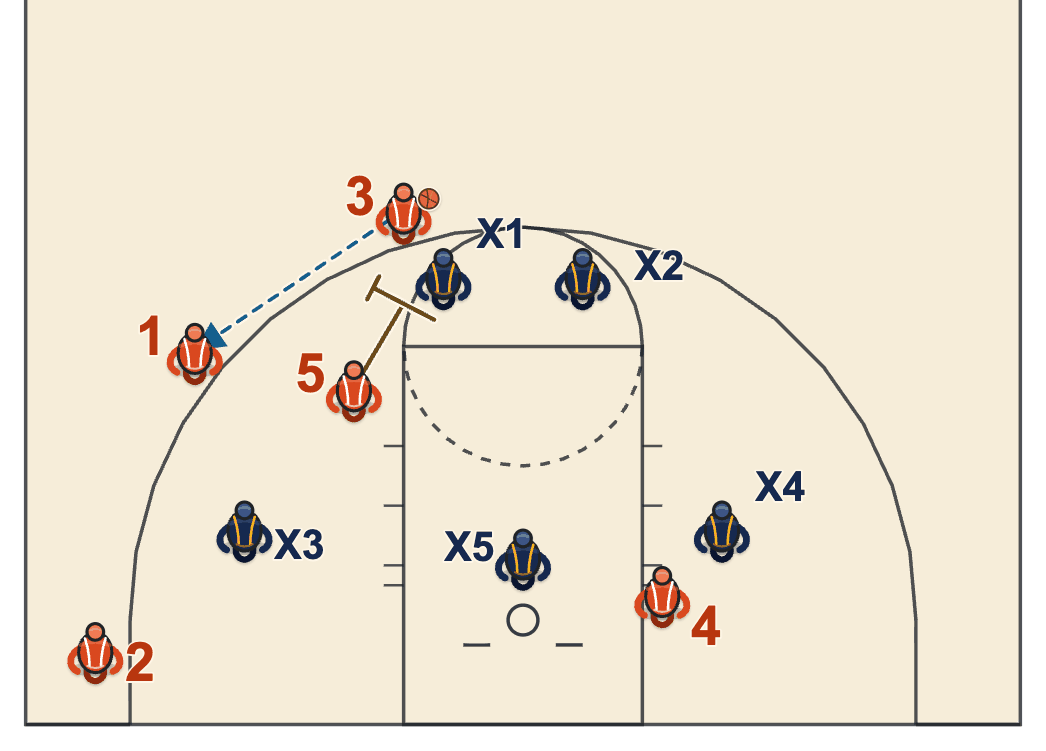 Then throw it back. 5 re-screens X1 and 3 passes back to 1 on the right wing, an almost-flare look. Now 1 and 2 outnumber X3 in the right corner. The skip to 2 is the other choice.
One low defender cannot guard a wing and a corner. If he steps up, the pass goes to the corner. If he stays down, the wing shoots or drives.
When the 2-3 Packs the Paint
Some zones sit low and will not come out. For those, go back to the book’s base set, Runner. It puts two guards up top and a runner in the corner, and that corner occupancy forces a low defender to leave the lane. If they play honest, stay in the 1-3-1 front and use the sets above.
Keep the Game-Night Card Short
The book ends the recognition chapter with one line per zone. For the 2-3 it is “Butler, or Runner if they pack the paint.” A bench with four 2-3 calls usually picks none of them in time. Teach the rules, give your players one call per look, and let the rules carry the rest.
If you are facing a zone with one defender up top instead, read How to Beat a 1-3-1 Zone. For the defensive side, see the 2-3 zone play page and the best offense for high school basketball.
Frequently Asked Questions
What is the best offense against a 2-3 zone? Line up in a 1-3-1 so your players sit in the gaps, then get the ball to the high post and the short corner. The book’s game-night call is Butler, or Runner when the zone packs the paint.
Should you post up against a 2-3 zone? Not on the low block. All three bottom defenders can reach it. Run the low post from short corner to short corner instead.
Where is a 2-3 zone weakest? At the high post between the two top defenders, at the short corners, and in the far corner after the zone shifts to the ball.
How do you teach zone offense to a young team? Start with the gaps and the high post. If your players cannot make the long skip pass yet, swing the ball with two shorter passes. The book’s install uses four drills over two weeks.
Get the full set of rules, sets and drills in Zone Offense Plays and Drills, available in paperback on Amazon.